
Yeast Pitch Rate & Starter Calculator
Determine target cell counts (million cells/mL/°P) and calculate Erlenmeyer flask DME starter volume.
Yeast Pitch Rate & Starter Sizing
Cell count kinetics and Erlenmeyer flask DME starter calculations
White & Zainasheff Pitch Rate Kinetics
\text{Cells Needed (Billions)} = \frac{\text{Rate} \times V_{\text{mL}} \times {^\circ}\text{Plato}}{1000}Standard ale pitch rate is 0.75M cells/mL/°P; lagers require 1.50M cells/mL/°P. Stir plate starters achieve ~1.4 billion new cells per gram of Dry Malt Extract at 1.037 SG.
- 1Enter batch volume in gallons and target original gravity (SG).
- 2Select beer style: Standard Ale (0.75M), High-Gravity Ale (1.0M), Standard Lager (1.5M), or High-Gravity Lager (2.0M).
- 3Choose your yeast format (Dry sachet ~200B cells vs Liquid pouch ~100B cells) and quantity of packs on hand.
- 4If cell deficit exists, the calculator outputs exact starter volume in liters and DME weight in grams.
Recommended Equipment for this Tool
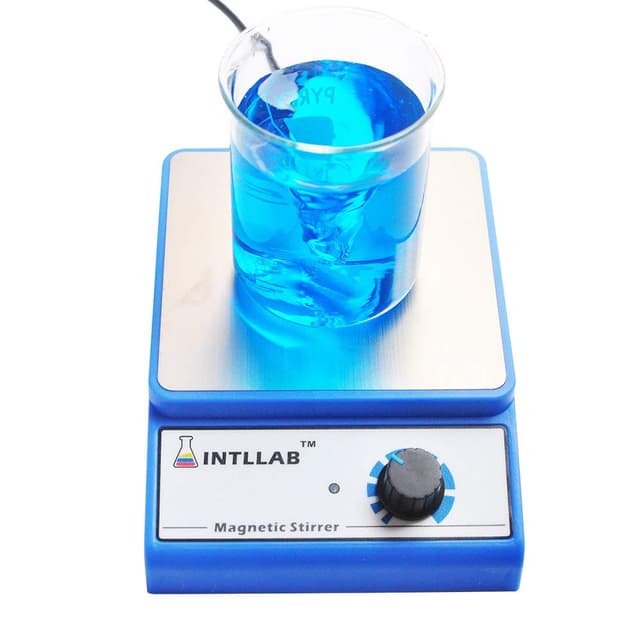
INTLLAB Magnetic Stirrer & 2000ml Borosilicate Erlenmeyer Flask Set
Underpitching yeast is the number one cause of sluggish fermentations, high final gravities, and unwanted off-flavors (diacetyl and acetaldehyde). Making a 1-2 liter vitality starter on a continuous magnetic stir plate provides constant oxygen ingress and keeps yeast cells suspended, quadrupling active cell counts in 24-36 hours.
Why do lagers require double the yeast cells of ales?
Lagers ferment cold (48–55°F / 9–13°C). Cold temperatures drastically suppress yeast metabolic kinetics and cell division. Without double the initial cell count, yeast cells struggle to overcome lag phase, creating sulfur and diacetyl off-flavors.
What gravity should my yeast starter wort be?
Always target 1.035 to 1.040 SG (approx 100g of Dry Malt Extract per 1.0 Liter of water). Higher starter gravity (> 1.045) stresses young yeast cells with osmotic pressure, reducing cellular vitality.
Explore Other Brewing Tools
View All 8 ToolsPut This Tool Into Practice
Test your brew day calculations against authentic BJCP style profiles and all-grain grain bills: